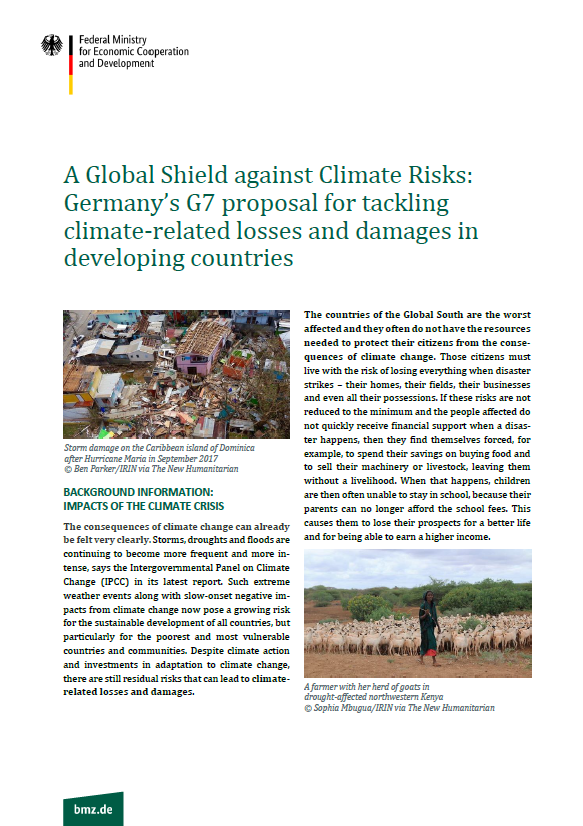
Water scarcity and drought are among the serious consequences of climate change.
Copyright© Jose Antonio Alba / Water Alternatives, via flickr, CC BY-NC 2.0

Climate change and development policy
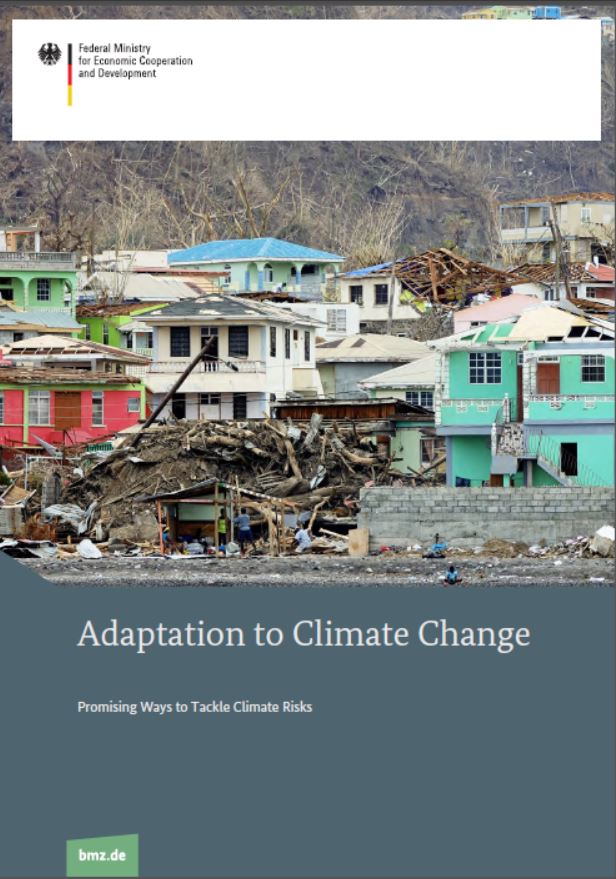
Germany is working with these countries to develop solutions, for instance with a view to making cities and agriculture more resilient to climate change, reducing hunger, securing reliable water supplies, developing sustainable energy systems and protecting vital natural resources. Global climate action is an expression of international solidarity and, simultaneously, an important form of crisis prevention, because the impacts of climate change can exacerbate existing conflicts, increase tensions within societies and destabilise entire regions. Heat waves, droughts and extreme weather events affect, above all, vulnerable population groups in our partner countries – but also people in Europe. That is why cooperation and mutual learning in areas such as technology, innovation and adaptation to climate risks are in the interest of all of us. Globally just climate policies help to create a liveable and fair world for current and future generations, and to protect human lives.
The German Development Ministry (BMZ) is working closely with its partner countries, as these countries often lack the requisite resources to reduce emissions and adapt to the impacts of climate change. Together, we are strengthening the capacities of local people, communities and institutions to meet the challenges of climate change. Strong alliances are important, as no country in the world can deal with these challenges by itself. Such cooperation opens up new economic opportunities for all those involved, including Germany – for example through the involvement of German companies in sustainable investment, through technology transfers, and through the development of new markets.
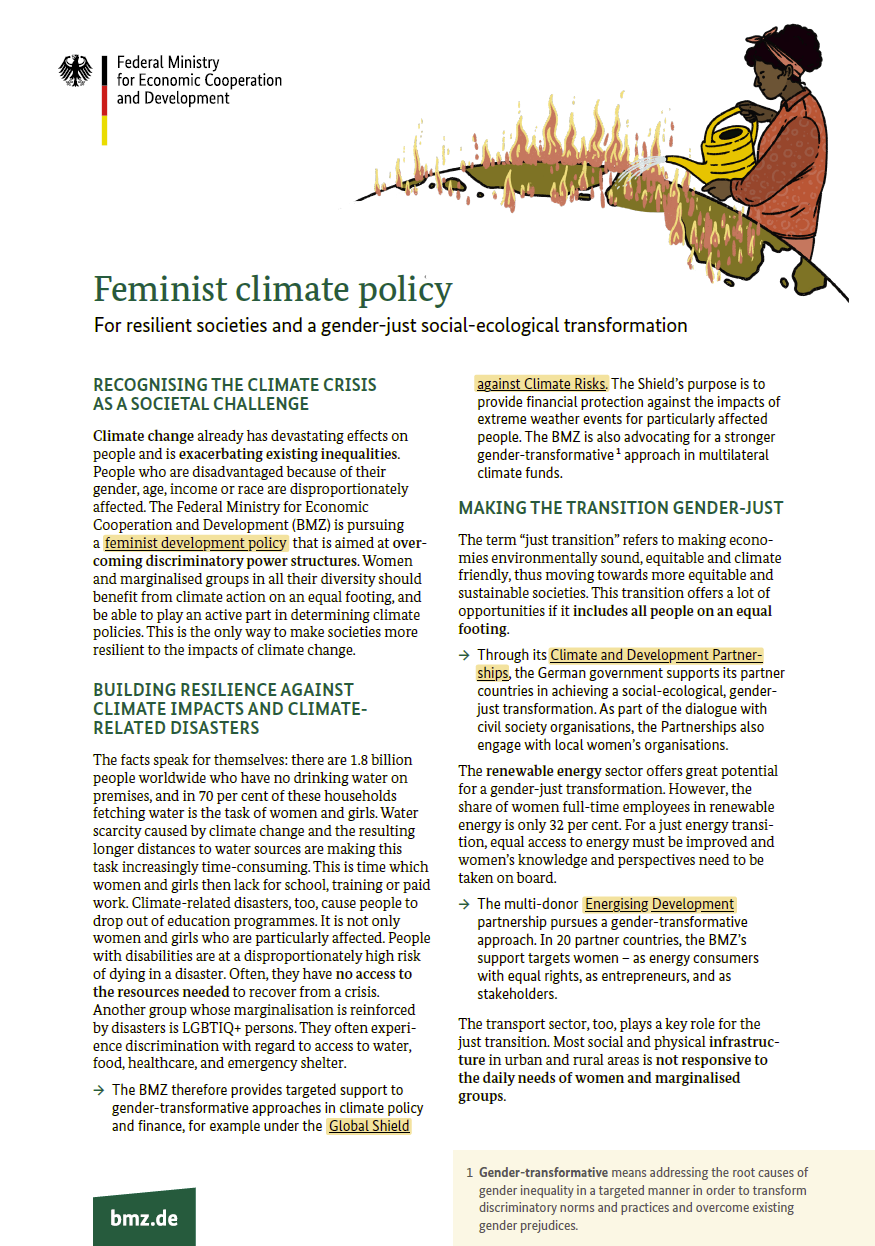
Many countries in the Global South are already faced with the twin challenge of striving to improve social and economic living conditions for large swathes of their populations while simultaneously responding to the increasingly noticeable impacts of climate change. In the long term, it will only be possible to overcome poverty and inequality if climate action and sustainable development are combined. This requires the reduction of emissions and a just transition to a climate- and resource-friendly economy. This principle of a just social-ecological transformation is embodied in the term “just transition”. It means that no one should be left behind on the path towards a climate-neutral, resilient and socially just economic and social system. New technologies and resource-friendly business models offer opportunities for sustainable prosperity – provided that everyone benefits. The BMZ assists people and institutions in its partner countries in tackling this necessary transition actively and on their own terms. In this way, Germany is contributing towards the implementation of the Paris Agreement and the 2030 Agenda for Sustainable Development, both in its partner countries and nationally.


What we do







As at: 02/09/2026